
What backgrounds and sets are available?
Your Options at the Berlin Rental Studio
You’re looking for the perfect rental studio for your next photo or video production and are asking yourself the key question: What backgrounds and sets are available (e.g., cove, backdrops)? This is a valid question, because the available equipment plays a major role in determining the quality and versatility of your shots. In this comprehensive guide, we’ll show you what professional backdrop options and studio backdrops you can expect to find in modern rental studios and how to make the best use of them for your projects.
From classic cove to creative backdrops and special set elements—here you’ll learn everything about the various background systems and their specific applications. The variety of available backgrounds not only determines the visual style of your shots but also their technical perfection. Whether you’re planning product photography, portraits, or creative setups—choosing the right background lays the foundation for professional results. We’ll explain what equipment is available to you and how to select the optimal system for your specific project, so you can make an informed decision.
- The Cove: The Classic Choice for Professional Product Photography
- Materials and Sizes of Available Coves
- Backdrop Systems - A Wide Variety of Backdrops for Creative Projects
- Color Selection and Combination Options
- Special Sets and Studio Areas
- Light Tents and Diffuse Lighting Systems
- Professional Hanging Systems
- Frequently Asked Questions (FAQ)
- Conclusion - Choosing the Right Background for Your Project

The Cove: The Classic Choice for Professional Product Photography
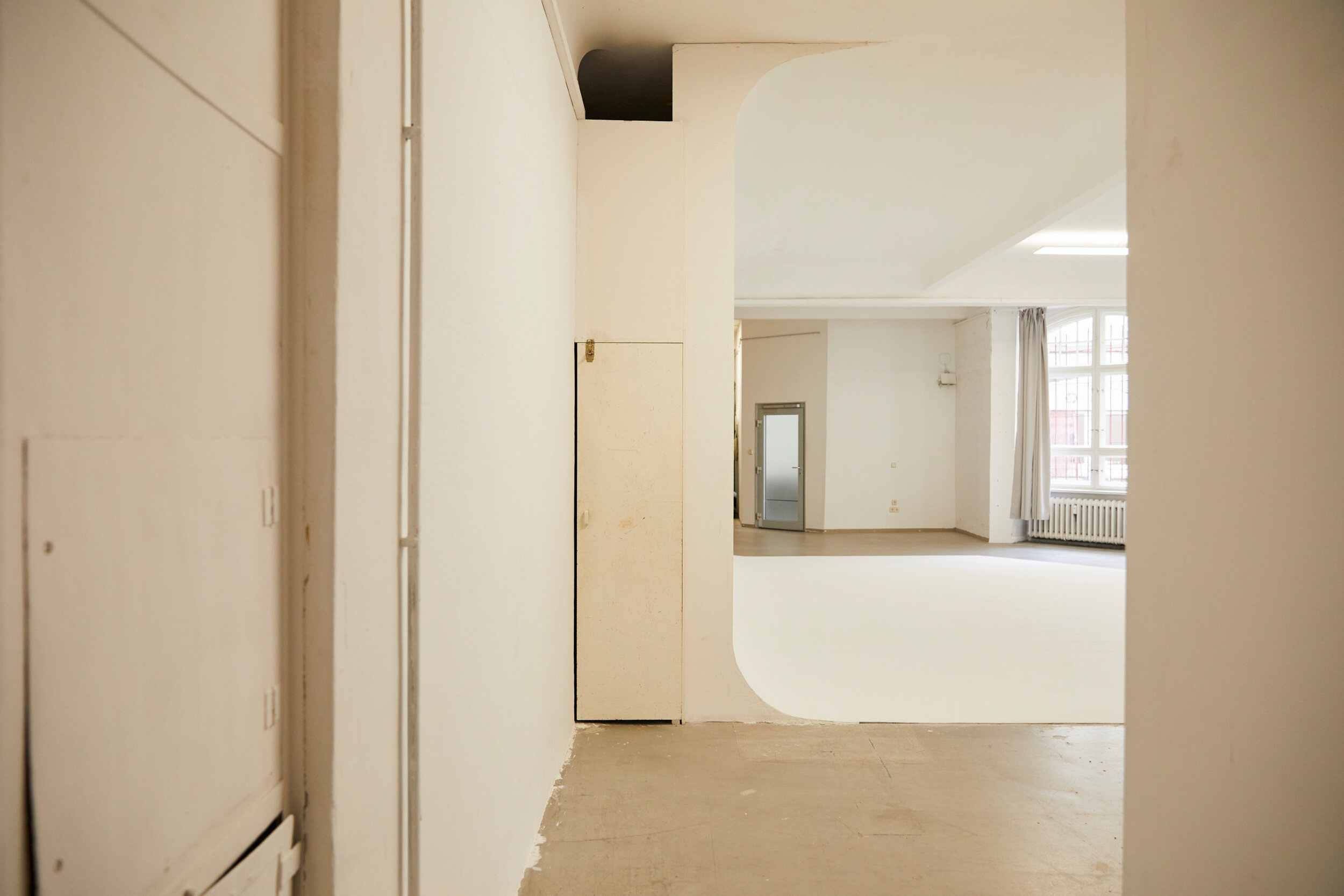
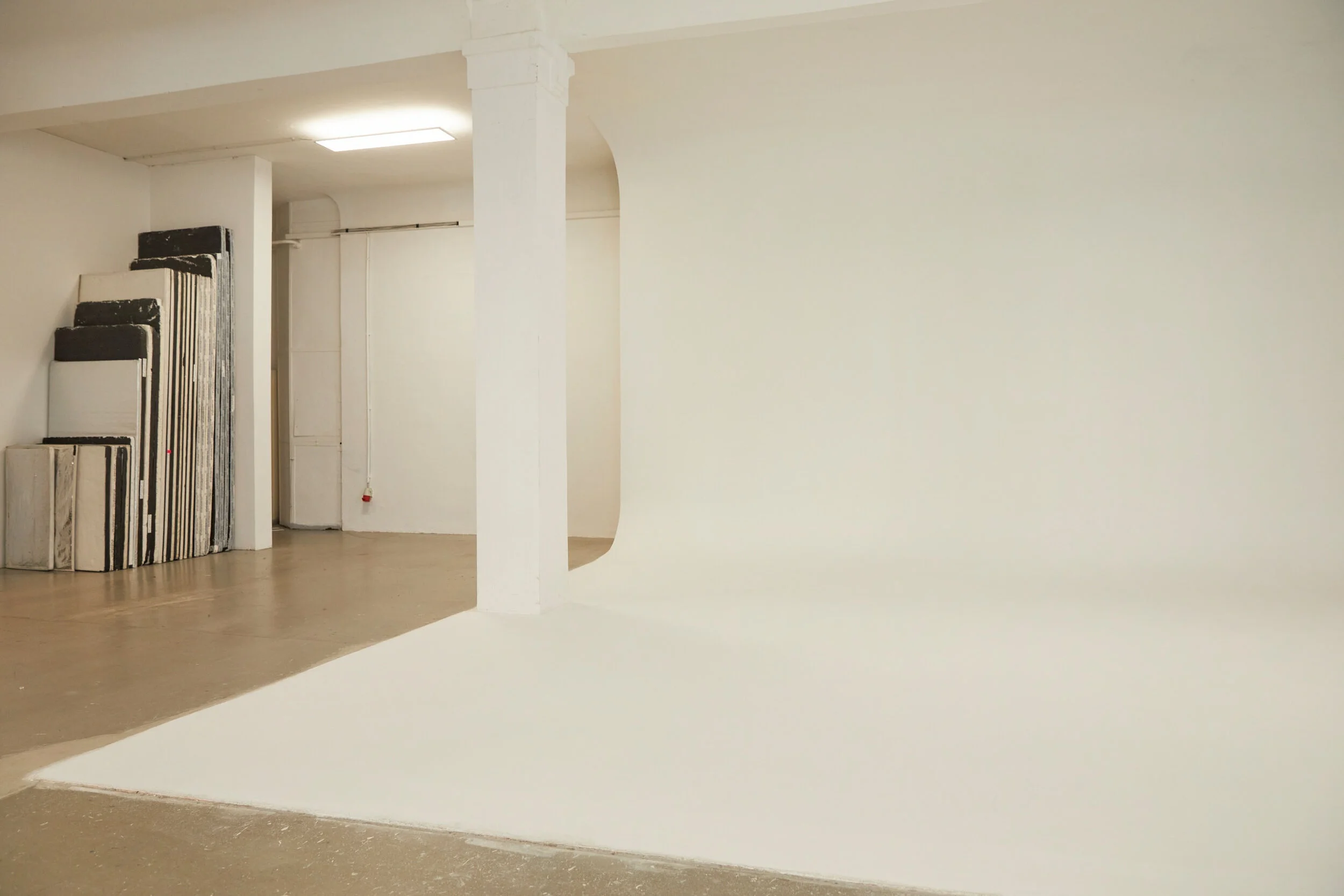
The cove is the centerpiece of every professional photo studio and comes standard in modern rental studios. For example, our studio features a permanently installed, 7-meter-wide cove across 270 square meters of studio space, giving you maximum flexibility for a wide variety of shooting scenarios. This specially designed, curved background system eliminates distracting edges between the floor and the background and creates the perfect seamless transition for professional product photography. The continuous gradient without visible transitions creates the impression of an infinite, neutral surface that showcases your subject perfectly.
Modern light boxes are made of translucent materials that allow for both reflected-light and transmitted-light photography, giving you maximum creative freedom in lighting design. The diffuse surface reduces harsh shadows and ensures even light distribution, which makes it much easier to cut out products later and saves you valuable time in post-production. The size of the available cove determines which product sizes can be photographed optimally—from small pieces of jewelry to larger items such as furniture or technical devices.
To get the most out of a cove , you should ensure balanced lighting. Side lighting prevents unwanted reflections and accentuates the shape of your product, while backlighting creates exceptionally clean, white backgrounds that produce an almost floating effect. The skillful combination of different light sources—key light, fill light, and accent light—enables you to take professional product photos of the highest quality that meet the demands of e-commerce and advertising photography.

Materials and Sizes of Available Coves
Professional studios offer coves in a variety of materials, each of which offers specific advantages for different applications. The standard version is made of matte white plastic or a specially coated, durable paper that minimizes reflections and ensures neutral color reproduction. For special applications, glass coves are also available, which create attractive reflection effects and make products appear particularly high-quality —ideal for luxury items or high-end electronics.
Sizing varies by studio size and intended use across different categories. Smaller tabletop models measuring 60x40 cm are perfect for jewelry, cosmetics, and small items that require precise presentation. Medium-format systems measuring 100x80 cm accommodate average product sizes and offer ample space for creative compositions. Large-format systems measuring 2x3 m or more allow for the photography of larger products and even small-scale portraits.
Important practical tip: Make sure the cove is at least 1.5 times as wide as your product to achieve optimal results. This rule of thumb ensures that the background is completely covered even with different camera positions and that no distracting edges appear in the image. Additionally, when choosing materials, you should consider how easily they can be cleaned —high-quality plastic surfaces are easy to disinfect and are more durable than paper options.
Backdrop Systems - A Wide Variety of Backdrops for Creative Projects
In addition to the classic “ cove ,” modern rental studios offer a variety of backdrop systems that open up unexpected creative possibilities. These flexible backdrop systems allow you to create a wide range of moods and atmospheres for your shots and are at the heart of versatile studio photography. Painted backdrops offer unique textures and artistic design—each hand-painted backdrop is one-of-a-kind and gives your photos a special, distinctive character. These backdrops are especially invaluable for portrait photography and creative projects, as they create depth and emotional impact.
Paper backdrops in a variety of colors are the most practical solution for quick color changes and are a staple of every professional studio. High-quality paper backdrops are wrinkle-free, opaque, and available in an impressive variety of colors—from neutral tones to vibrant accent colors. They can be changed quickly and easily and are suitable for both small-scale product shots and large-scale portrait photography. Fabric backdrops made from materials such as velvet, linen, or muslin add a special texture and natural feel to the image and are perfect for creating a warm, organic atmosphere.
All professional backdrops comply with current safety standards and have been treated to be flame-retardant —this is particularly important when using artificial lighting that generates a lot of heat. Modern backdrops are wrinkle-resistant and can be stored in a space-saving manner. The surfaces are treated to ensure even light reflection and prevent distracting hotspots, which is essential for professional lighting.
Color Selection and Combination Options
The technology behind the blackout system is just as well thought out as the rest of the studio. Full-height blackout curtains are standard in modern rental studios, and heavy, multi-layered blackout curtains are typically used, mounted along track systems on the ceilings. These systems cover entire window walls and allow you to switch between natural light and blackout conditions in just a few minutes. This solution is particularly flexible, as it allows for covering even individual window fronts and shaping the light in a targeted manner.
Alternative systems such as electric roller shutters are used less frequently because they are less flexible than curtain solutions. High-quality curtains also completely block out light from the sides and can be moved faster and more quietly than permanently installed roller shutters. The transition time between daylight and complete blackout typically takes 5–10 minutes, depending on the window size. This allows you to switch flexibly between lighting moods during a shoot and maintain maximum creative control over your production.




Special Sets and Studio Areas
For ambitious projects that go beyond traditional backdrops, specialized rental studios also offer unique set elements that give your photos a distinctive character. An authentic brick wall lends your photos an urban authenticity and industrial charm that is particularly valued in lifestyle photography, model shoots, or product shots with a rustic feel. These permanently installed elements create a natural texture and depth that are perfect for photos intended to exude authenticity and character.
Metal structures, when used as design elements, create a modern, industrial atmosphere and can be used in a variety of ways—as structural supports, decorative elements, or architectural accents. These structural elements are particularly popular in fashion and automotive photography because they convey clean lines and a contemporary aesthetic. They can be integrated into the composition of an image either as the main element or as a subtle addition.
Lighting for textured backgrounds requires special attention: brick walls and metal structures really come to life with well-thought-out lighting. Side lighting emphasizes the texture and creates a sense of depth, while soft front lighting highlights the details without casting harsh shadows. These set elements can be skillfully combined with classic backdrops—a partially concealed brick wall in the background can create interesting image compositions, while metal structures can serve as framing elements and direct the viewer’s gaze. The spacious studio area allows for complex set arrangements and offers room for various perspectives and camera angles.

Light Tents and Diffuse Lighting Systems
Light tents are often used in professional studios to ensure exceptionally even lighting and the perfect rendering of reflective surfaces. These enclosed systems create optimal conditions for product photography by evenly distributing light and completely eliminating unwanted reflections. The light tent completely encloses the subject with diffused, translucent material, while external light sources shine through the tent walls, creating shadow-free, uniform lighting that delivers perfect results even with the most challenging materials, such as glass or chrome-plated surfaces.
Depending on the size of the item, various light tent sizes are available to best meet your needs. Small 50x50 cm tents are perfect for jewelry, watches, and small electronic devices, while larger 100x100 cm models can accommodate more substantial items such as handbags, shoes, or medium-sized electronics. Professional large-format tents even allow for the photography of household appliances or small pieces of furniture.
Light tents significantly reduce the effort required for lighting setup and guarantee reproducible results—especially for product lines, this is a huge advantage in terms of consistency and efficiency. The uniform illumination inside the light tent drastically reduces the amount of post-processing required: cropping becomes easier, color corrections are minimal, and retouching is limited to the essentials. This is particularly advantageous for reflective surfaces such as glass, metal, or glossy plastic, where conventional lighting often creates problematic reflections and hotspots.
Professional Hanging Systems
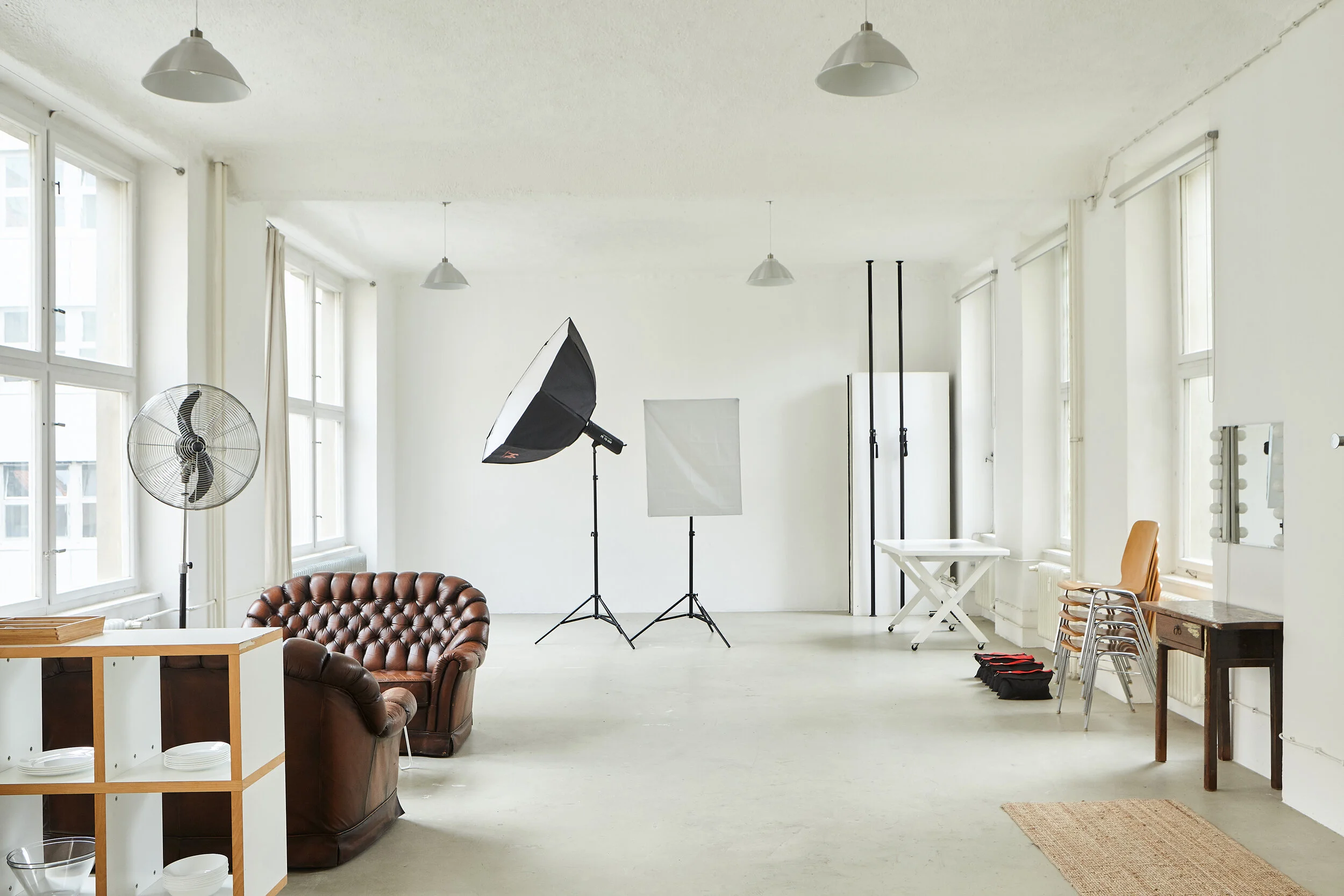
Modern rental studios are equipped with professional hanging systems that give you maximum flexibility when quickly switching between different backdrops. These track systems or boom arm setups are permanently mounted to the ceiling or on sturdy tripods and can hold multiple backdrops at the same time. This allows you to create different looks during a session without having to take time-consuming breaks for setup changes.
Electric roll-up systems are considered premium features and allow you to switch between different paper backdrops with the push of a button. These systems are especially invaluable for extensive product lines or photo shoots with multiple models, as they save time and ensure a smooth workflow. Manual systems with a crank mechanism offer a more cost-effective alternative and are still extremely practical for professional use.
The load-bearing capacity of the hanging systems is an important factor—professional designs can safely support even heavy fabric backdrops or painted backdrops. Height-adjustable systems allow for adaptation to different room heights and shooting situations. Endless systems are particularly practical, as they allow the backdrop to be used both as a background and as flooring to create that characteristic seamless transition.


Frequently Asked Questions (FAQ)
-
For portrait shots (head and shoulders), a width of 1.5 meters may be sufficient. For full-body shots, or if you need more room for the model to move, you should choose a backdrop that is at least 2.5 meters wide and 3 meters high. This ensures that the background is completely covered—even with different camera angles and dynamic poses—and that no distracting edges are visible.
-
Yes, absolutely! Well-equipped rental studios offer you multiple backdrop options, and changing them is actually encouraged to add variety to your photo series. Switching between paper backdrops of different colors on a professional hanging system takes only a few minutes. Painted backdrops or fabric backdrops require a bit more setup time to secure them properly, but the effort is worth it for the unique visual effect you’ll achieve.
-
Professional fabric backdrops are usually made of wrinkle-resistant materials or can be smoothed out by stretching them taut on the backdrop system. For stubborn wrinkles, use a steam iron to smooth the fabric quickly and gently, or iron on a low setting for delicate materials. Important: Let the backdrop cool completely before use, and test its heat tolerance on an inconspicuous spot.
-
Yes, modern backdrops are optimized for LED, halogen, and flash lighting and can withstand high temperatures. Pay attention to the color temperature of your light sources and adjust the white balance accordingly if necessary—5600K for daylight LEDs and 3200K for halogen lamps. Translucent materials also allow for creative backlit shots, in which the background is illuminated from behind to create special effects.
Conclusion - Choosing the Right Background for Your Project
Choosing the right background is much more than a minor decision—it significantly determines the quality, impact, and professional appearance of your photos. The question “What backgrounds and sets are available (e.g., cove, backdrops)?” should therefore be a top priority when selecting a studio. Modern rental studios offer you an impressive variety of options, ranging from the functional cove for flawless product photos to versatile backdrop systems in countless colors and textures, all the way to distinctive set elements such as authentic brick walls.
Use the wide variety of available background systems strategically to bring your creative visions to life. The thoughtful combination of technical perfection and artistic expression makes the crucial difference between good and exceptional shots. Whether you’re planning precise product photography for e-commerce, emotional portraits, or creative setups—choosing the right background lays the foundation for outstanding results.
The available equipment should suit your project: Light tents and coves are ideal for product shoots, painted backdrops are perfect for creative portraits, and textured set elements create the perfect atmosphere for authentic lifestyle shots. Ready for your next shoot? Make sure to research the background equipment at the studio of your choice—a professional environment with the right selection of background systems is the first and most important step toward turning your creative ideas into impressive, professional images.